

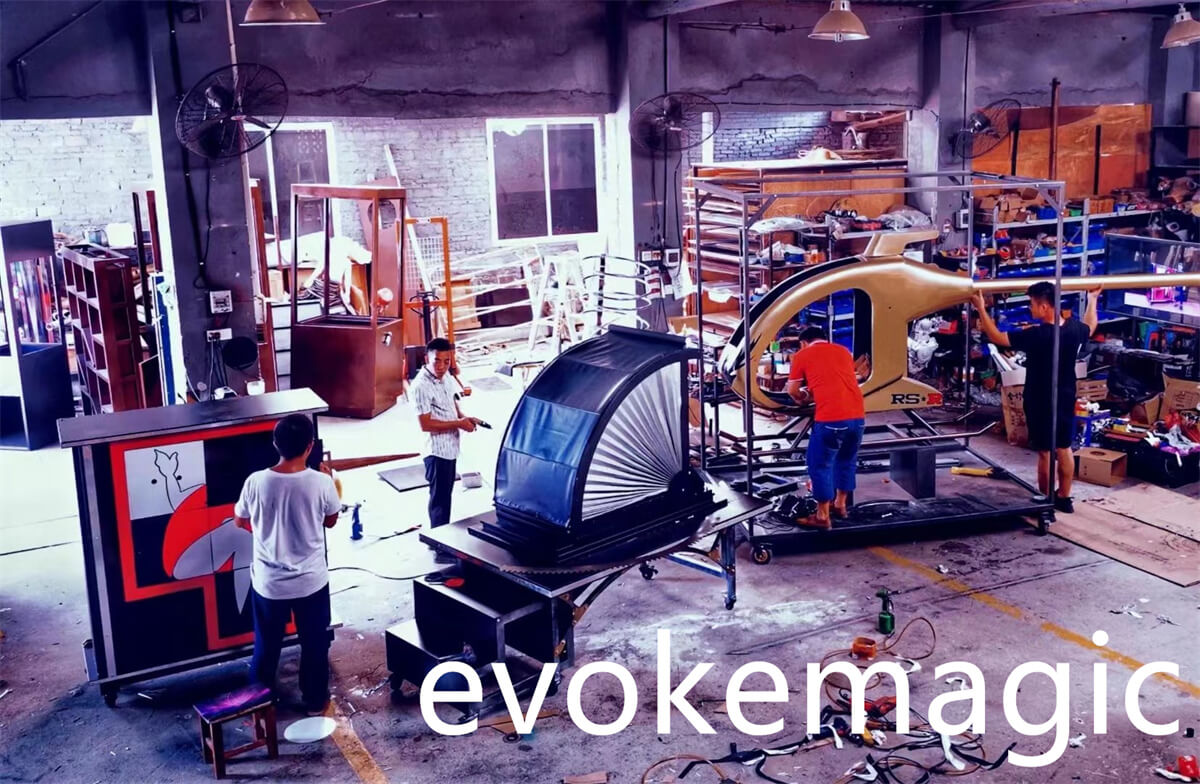
The five factors that actually set the price
Every quote we send is built from the same five variables. Understand them and you can read any supplier’s price sheet — including the ones that look suspiciously cheap.1. Effect complexity and mechanism count
A prop that does one thing well is cheap. A prop that does one thing while hiding three other things is not. A folding sword box needs a lattice, a hinge system and a collapsible shell. A seven-part cutting box needs seven independent blade paths that all read as one continuous cut from the front row. Every additional mechanism adds machining, assembly hours and a new failure point that has to be tested before it ships.2. Base construction and materials
This is where most of the price gap lives. Plywood and staples will survive a school show. They will not survive 200 tour dates, a cargo hold and a stage crew that loads out in 40 minutes. Professional builds use aluminium extrusion framing, aircraft-grade plywood, steel reinforcement at load points, and a road case that is itself a piece of furniture. Material cost between a “party” build and a “tour” build can differ by a factor of four before any labour is added.3. Person capacity and load rating
A prop that holds an assistant weighing 55 kg is a different engineering problem from one that must safely hold 90 kg in motion, on a raked stage, with a performer who is not a trained acrobat. Load rating drives frame gauge, bearing choice and the safety margin your insurer will ask about. Never accept a quote that does not state a rated load.4. Automation and control
Manual illusions are operated by an assistant and cost what they cost. Add electric drive, DMX or show-control integration, position feedback and an emergency stop, and you add both hardware and the engineering time to make it repeatable to the millimetre. Automation is usually 20–40% of the total price of a large illusion — and it is the part that most affects whether the effect lands reliably at show 150.5. Volume: one-off versus batch
Jigs, CNC programs, moulds and templates are one-time costs. On a single unit they are absorbed into that unit’s price. On a run of five or ten, they are spread across the batch, which is why dealers ordering for a rental fleet pay meaningfully less per unit than a magician ordering one.2026 price brackets, factory-direct
These are ex-works ranges for our own production, before freight, duty and local taxes. Retail and dealer pricing in your market typically sits 30–100% above these figures.| Categorie | Typical factory-direct range (USD) | Examples |
|---|---|---|
| Small / close-up stage props | $150 – $900 | Needle through glass, ring escape, small appearance boxes |
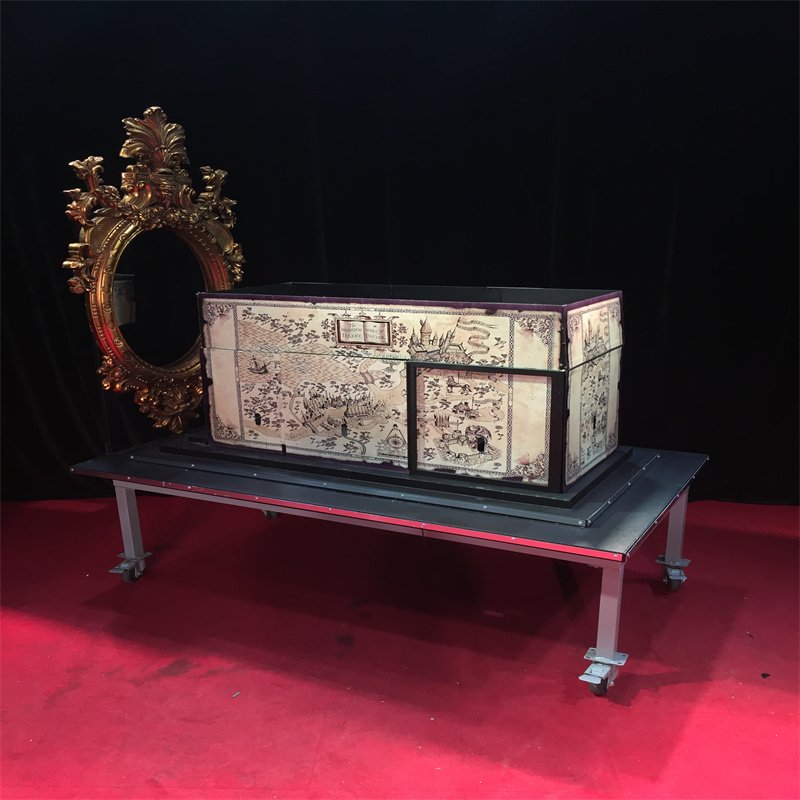
| Classic mid-size illusions | $1,200 – $4,500 | Zig-zag, sword box, sub trunk, chair suspension |
| Professional stage illusions | $4,000 – $12,000 | Seven-part cutting box, twist machine, stunt bed, body exchange |
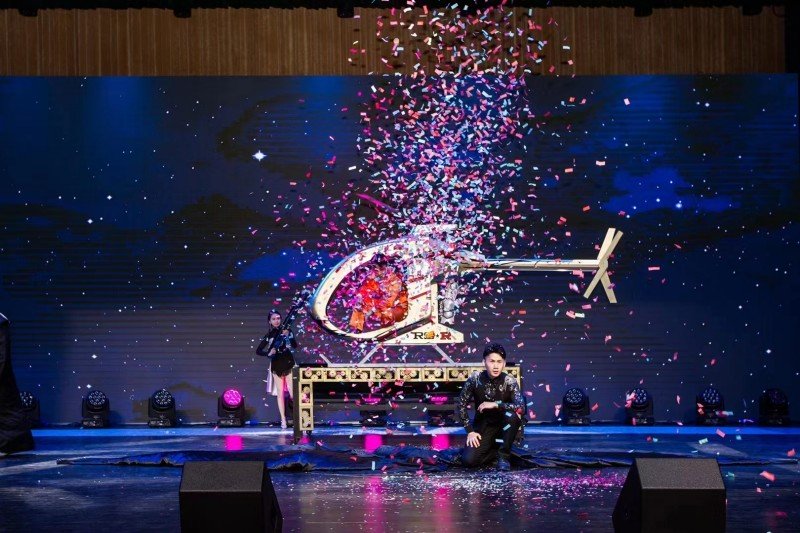
| Large-scale / grand illusions | $12,000 – $45,000+ | Helicopter appearance, motorcycle reveal, full-stage transformation sets |
| Fully custom builds | $18,000 – $80,000+ | Branded reveals, TV and arena productions, multi-effect sets |
Why two quotes for the same illusion differ by five times
When a buyer sends us a competitor’s quote at one-fifth of ours, the difference is almost always traceable to five things: thinner framing, no road case, rated load unstated, no spare parts kit, and no test performance before shipment. None of those are visible in a product photo. All of them determine whether the prop opens on opening night or on the third week of a tour. Ask any supplier — including us — for four documents before you pay a deposit: a dimensioned drawing, a bill of materials by frame and skin, a stated load rating, and a factory test video of the specific unit being built for you. A supplier who cannot produce those is not cheaper. They are just quoting a different product.Custom versus catalog: what originality actually costs
Catalog illusions are proven. The mechanism has been built hundreds of times, the tolerances are known, and the price is stable. If your show needs a sword box, buy a sword box. Custom work is a different budget line entirely. A custom build carries design time, a prototype or partial mock-up, at least one revision cycle, and the risk that the effect reads differently on stage than it did on paper. In our experience, a custom illusion runs 40–120% above the closest catalog equivalent, and it takes 8–14 weeks rather than 4–6. Budget for the design phase as a real cost, not an overhead.The costs buyers forget
- Freight. Large illusions ship on pallets or in crates and move by sea or air freight. A grand illusion can cost $1,500–$6,000 to move internationally, plus destination charges and inland trucking. Always quote CIF or DDP, not just ex-works.
- Duty and VAT. Check your country’s tariff code for stage equipment before you commit. This alone can add 10–25% to landed cost.
- Spares. Order the wear parts kit with the unit — hinges, bearings, latches, blade guides. Air-freighting a $12 part mid-tour costs $200 and a show.
- Crew time. A prop that needs two people and 25 minutes to set is not free. Rehearsal and load-out labour across a 30-date tour often exceeds the price of a mid-size illusion.
- Storage. Grand illusions are bulky. Confirm crate dimensions before you sign a venue or a warehouse contract.
How to get an accurate quote fast
Send four things and any competent factory can price your project in 48 hours: the effect you want (a reference video is worth a page of description), your stage depth and wing space, the rated load and number of performers involved, and your target ship date. Vague enquiries get vague prices — usually the highest one, as a safety margin.What a fair quote looks like
A professional quote is itemised: base unit, finish, road case, control system, spares, crating, and freight terms. It states lead time and a warranty period. It names the person who will answer your questions during the build. If you receive a single lump-sum number with no breakdown and no lead time, treat it as an estimate, not an offer. If you are planning a show for 2027 and want to know what your specific effect should cost — catalog or custom — send us the reference and your stage dimensions. We will come back with a real number, a drawing, and a lead time, not a range. Contact us on WhatsApp for factory-direct pricing. Tell us the effect, the venue and the dates, and we will quote against a real production schedule.produse asemanatoare
Nu s-a găsit niciunul